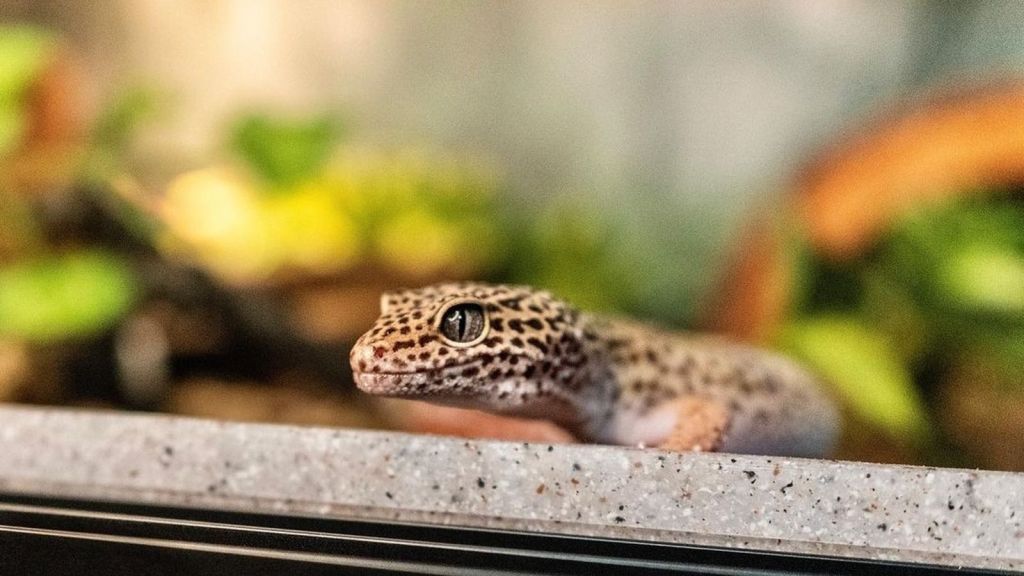
Are you thinking about adding a leopard gecko to your family? Or maybe you already have one and want to make sure you’re giving them the best care possible? You’re in the right place! This leopard gecko care guide will walk you through everything you need to know, from setting up the perfect habitat to feeding, handling, and keeping your gecko healthy.
Leopard geckos are awesome little reptiles, and popular for good reason. They are one of the easier reptiles to care for, full of personality, and great pets for beginners and experienced owners alike. Let’s dive into how to keep your gecko thriving!
Setting Up Your Leopard Gecko’s Habitat
Creating the right home is step one in happy leopard gecko care.
- Tank Size: A 20-gallon enclosure is widely known as the minimum size for leopard geckos, but I would definitely recommend going with at least a 40-gallon enclosure. It will give your scaley friend twice the room to move around, and they will definitely appreciate it. My own leopard gecko is in a 120 gallon (4’x2’x2′) and is always checking things out!
- Substrate: I recommend using loose substrate for a naturalistic and enriching environment, as leopard geckos love to dig! I would do 70% organic topsoil and 30% sand for the best results. Only healthy leopard geckos should be housed on loose substrate. If you want to do other substrate options to avoid risk of impaction, paper towels or tile can work. Stay away from reptile carpet, as it can harbor bacteria and can get their little toes stuck to it.
- Heating: Leopard geckos are cold-blooded, so they need a warm side and a cool side in their tank to regulate their temperature. At night, leopard geckos can tolerate a drop in temperature down to 60°F.
- Basking Surface Temperature: 94-97°F
- Warm Side Temperature: 90-92°F
- Cool Side Temperature: 70-77°F
- Lighting: Leopard geckos are crepuscular, meaning they most active around sunrise and sunset. A natural day-night cycle is essential to keep their schedule on track. This can be done with a heat lamp and a UVB lamp. Do not use a colored night heat bulb, as it can disrupt their sleep/wake cycle.
- Hides: Your gecko will love having at least two cozy hiding spots — one on the warm side and one on the cooler side. I recommend adding a third hide, specifically a moist one, to assist with shedding.
- Humidity: Keep things pretty dry, around 30-40%, but don’t forget a moist hide to help with shedding. The humid hide should provide humidity levels between 70-80%.
- Cohabitation: I generally do not recommend housing multiple leopard geckos in the same enclosure. They can become territorial, which can result in lost tails and bite wounds. Play it safe and keep them separate!
Feeding Your Leopard Gecko
Leopard geckos are insectivores, so their diet mainly consists of live bugs.
- Favorite foods: Crickets, mealworms, and Dubia roaches are all great options. I recommend switching between these options to add variety to your leopard gecko’s diet.
- Gut-loading: Feeding your feeder insects nutritious food before your gecko eats them makes a big difference in their health. Fresh veggies are a great way to accomplish this.
- Supplements: Dust those insects with calcium powder each feeding and add a multivitamin once a week to keep your gecko strong. Dust the insects without D3 if you’re using UVB, and dust with D3 if you are not using UVB.
- Feeding schedule: Baby and juvenile geckos eat every day, but adults are fine with feeding every other day. I feed my gecko three times a week and it works perfectly for both of us!
- Water: Always have fresh water available in a shallow dish. There should be enough for your leopard gecko to drink but shallow enough that they can’t drown. Don’t forget to treat it with ReptiSafe!
Handling Your Leopard Gecko
Getting your gecko comfortable with you takes patience and gentle care.
- Although it may be tempting to start playing with your new leopard gecko right away, make sure you wait 2 weeks after buying before beginning handling to avoid stressing them out.
- After the 2-week waiting period is over, introduce yourself to your leopard gecko by putting your hand in their enclosure every night for a few minutes so it can get used to your presence.
- When you begin handling, start with 5-minute sessions every other day. You can then gradually increase the length and number of sessions from there! Make sure you support their feet, body, and tail.
- Once your gecko associates you with food like mine does, they come out and beg for food when they see you, which is pretty darn cute.
Keeping Your Leopard Gecko Healthy
Pay attention to your gecko’s behavior and environment to avoid common health issues.
- Shedding: They’ll shed their skin regularly, so make sure they have a moist hide to help this along. You don’t want it to get stuck! Also, leopard geckos eat their shed, so you won’t find anything in the enclosure. Don’t be alarmed, it’s super nutritious!
- Impaction: Your leopard gecko should be completely healthy before introducing loose substrate. If they are not, it could cause impaction. Also, avoid feeding bugs that are too big to prevent digestive blockages.
- Watch for Warning Signs: If your gecko seems lethargic, refuses food, or shows swelling, it’s time for a vet visit.
Conclusion
Leopard geckos are amazing pets that bring a lot of joy. With the right habitat, diet, and a little patience, you’ll have a happy, healthy gecko for years to come. If you ever have questions or want some extra tips, feel free to reach out—I’m here to help!
 Kinzey's Critter Care
Leave a comment